Hey there! As a supplier of Excavator Grapples, I often get asked a bunch of questions about what these bad boys can and can't do. One question that pops up quite a bit is, "Can an excavator grapple be used for handling sand or gravel?" Well, let's dig into this topic and find out.
First off, let's talk a bit about what an excavator grapple is. It's an attachment that you can hook up to an excavator. It's got these big jaws that can open and close, allowing it to grab onto all sorts of stuff. There are different types of grapples, like the Excavator Scrap Grapple, which is designed to pick up scrap metal and other heavy debris. But can it handle sand or gravel?
The Basics of Handling Sand and Gravel
Sand and gravel are loose materials. Unlike solid objects like scrap metal or logs, they don't hold their shape well. When you try to grab them, they tend to slip through the gaps. That's the first challenge we face when thinking about using an excavator grapple for these materials.
However, some grapples are designed with a closer jaw spacing. This means there are fewer gaps for the sand and gravel to fall through. These types of grapples can be more effective at handling loose materials. But even with a close jaw spacing, it's not going to be as efficient as using a specialized bucket for sand and gravel.
Advantages of Using an Excavator Grapple for Sand and Gravel
There are a few situations where using an excavator grapple for sand or gravel can be a good idea.
Versatility
One of the biggest advantages of an excavator grapple is its versatility. If you already have a grapple on your excavator and you suddenly need to move some sand or gravel, you don't have to swap out the attachment. You can just use the grapple you've got. This can save you a lot of time, especially on a job site where time is money.

Precision
Grapples allow for more precise control compared to buckets. You can pick up a specific amount of sand or gravel from a pile. This can be useful when you need to place the material in a very specific location, like filling in small holes or gaps.
Disadvantages of Using an Excavator Grapple for Sand and Gravel
Of course, there are also some downsides to using a grapple for sand and gravel.
Spillage
As I mentioned earlier, sand and gravel are loose materials. Even with a close jaw spacing, there's still going to be some spillage. This can be a problem if you're working in a clean environment or if you need to move a large amount of material. You might end up wasting a fair amount of sand or gravel, which can add up over time.
Efficiency
Specialized buckets are designed specifically for handling loose materials like sand and gravel. They have a smooth interior and a shape that allows for easy loading and unloading. Grapples, on the other hand, are more designed for grabbing and holding solid objects. So, when it comes to moving large quantities of sand or gravel, a bucket is usually going to be more efficient.
Types of Grapples Suitable for Sand and Gravel
Not all grapples are created equal when it comes to handling sand and gravel. Here are a few types that might work better:
Hydraulic Grapples
Hydraulic grapples offer more control over the opening and closing of the jaws. This means you can adjust the pressure to better hold onto the sand and gravel. They also tend to have a more precise operation, which can reduce spillage.
Root Grapples
Root grapples have a more open design compared to some other types of grapples. However, they can still be used for sand and gravel if you're careful. Their open design allows for better visibility, which can be helpful when you're trying to pick up the material.
Considerations Before Using an Excavator Grapple for Sand and Gravel
Before you decide to use an excavator grapple for sand or gravel, there are a few things you need to consider.
Job Requirements
Think about the specific requirements of your job. How much sand or gravel do you need to move? How far do you need to move it? If you're only moving a small amount of material over a short distance, a grapple might be a good option. But if you're dealing with large quantities, you might be better off using a bucket.
Equipment Compatibility
Make sure your excavator is compatible with the grapple you're planning to use. Different grapples have different weight and size requirements. Using an incompatible grapple can damage your excavator or reduce its performance.
Real - World Examples
Let's take a look at some real - world examples of when an excavator grapple was used for sand and gravel.
Small - Scale Landscaping Projects
On a small - scale landscaping project, a contractor might use an excavator grapple to move a small amount of gravel for a garden path. Since the quantity is small and precision is important, the grapple can do the job effectively. The contractor doesn't have to switch out the attachment, and they can place the gravel exactly where it needs to go.
Emergency Situations
In an emergency situation, like a flood where sandbags need to be filled with sand quickly, an excavator grapple can be used to scoop up sand. While it might not be the most efficient method, it can get the job done in a pinch.
Other Attachments for Sand and Gravel
If you find that an excavator grapple isn't the best option for your sand and gravel handling needs, there are other attachments you can consider.
Small Household Excavator
Small household excavators often come with specialized buckets for handling sand and gravel. These buckets are designed to be more efficient at moving loose materials. They're a great option for small - scale projects around the house or in a backyard.
Excavator Mounted Concrete Saw
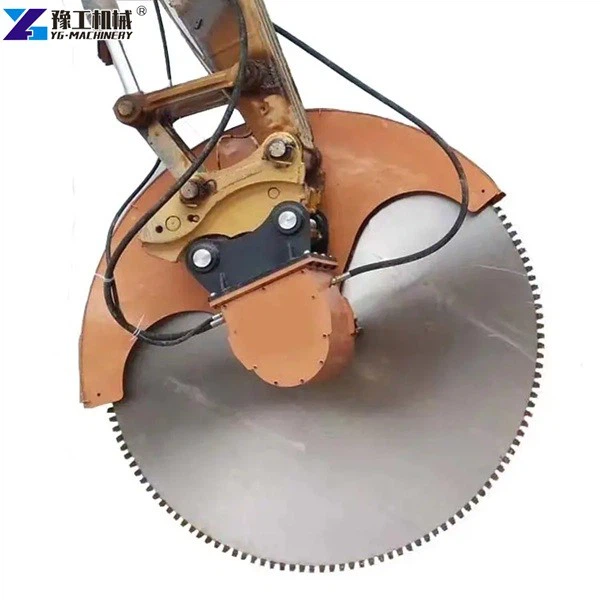
While not directly related to handling sand and gravel, an excavator mounted concrete saw can be useful on a job site where you need to prepare the area before moving the sand and gravel. It can cut through concrete or other hard surfaces, making it easier to create a level base for the materials.
Conclusion
So, can an excavator grapple be used for handling sand or gravel? The answer is yes, but it depends on the situation. There are advantages and disadvantages to using a grapple for these materials. If you need versatility and precision, and the quantity of sand or gravel is relatively small, a grapple can be a good choice. However, if you're dealing with large quantities, a specialized bucket is usually more efficient.
If you're in the market for an excavator grapple or other excavator attachments, I'd love to talk to you. Whether you're a professional contractor or a DIY enthusiast, we've got the right equipment for your needs. Reach out to us to discuss your project and find the best solution for you.
References
- Construction Equipment Handbook: A guide to various construction equipment and their uses.
- Landscaping and Earth - Moving Magazine: Articles on best practices for handling different materials on job sites.