Alright, folks! As a road roller supplier, I often get asked a super common question: "How long does it take to compact a certain area with a road roller?" Well, let me tell you, it's not a one - size - fits - all answer. There are a bunch of factors that come into play, and I'm gonna break 'em down for y'all today.
First off, the type of road roller you're using makes a huge difference. We've got different kinds like the Mini Roller Compactor, Single Drum Road Roller, and Pedestrian Roller. Each has its own unique features and capabilities, which directly affect the compaction time.
The Mini Roller Compactor is, as the name suggests, small and nimble. It's great for tight spaces, like small construction sites, sidewalks, or around obstacles. But because of its relatively small size, it might take a bit longer to cover a large area compared to bigger rollers. If you're using a Mini Roller Compactor on a job that requires compacting a large parking lot, expect the process to take a while. You'll have to make multiple passes over the area to achieve the desired compaction level, and each pass will cover a smaller width compared to larger rollers.

On the other hand, the Single Drum Road Roller is a workhorse. It's larger and more powerful, designed for larger - scale projects such as highway construction or big industrial lots. With its bigger drum and higher compaction force, it can cover more ground in a single pass. So, for a large area, it'll definitely be faster than the Mini Roller Compactor. But keep in mind, it might be a bit more difficult to maneuver in tight spots.
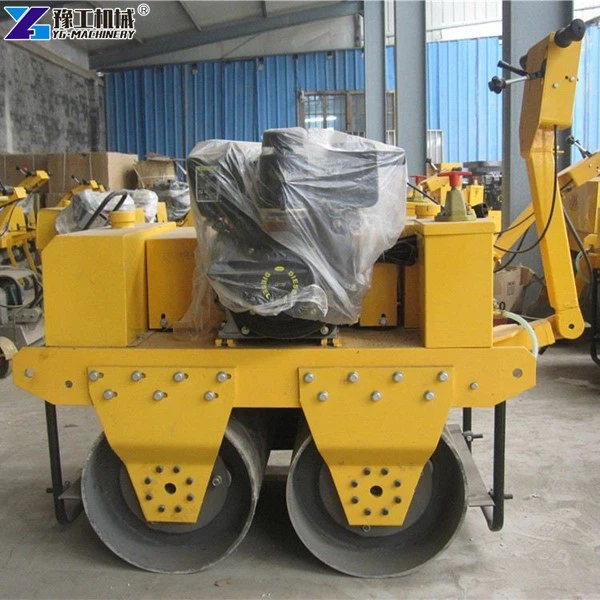
The Pedestrian Roller is another option, which is often used for smaller, less - demanding jobs or for finishing touches. It's operated by a person walking behind it, so its speed and coverage area per pass are limited. If you're using it to compact a small garden path or a narrow driveway, it'll do the job just fine. But for a large commercial area, it'll take a whole lot of time.
Now, let's talk about the area you're trying to compact. The size of the area is pretty obvious, right? The bigger the area, the longer it'll take. But it's not just about the sheer square footage. The shape of the area also matters. An area that's long and narrow might take longer to compact compared to a square or rectangular area of the same size. That's because turns and maneuvers can slow down the process, especially for larger rollers that are less agile.
Terrain is yet another important factor. If the ground is flat and smooth, the road roller can move quickly and efficiently. But if the terrain is uneven, with bumps, slopes, or holes, the compaction process will be much slower. The roller has to work harder to cover all the areas, and you might need to make extra passes to ensure uniform compaction. For example, if you're compacting an area on a hillside, you have to be extra careful to prevent the roller from slipping, and this will naturally slow down the operation.
The type of material you're compacting is also crucial. Different materials have different compaction requirements. For instance, compacting gravel is generally easier and faster than compacting clay. Gravel particles are larger and more free - flowing, so they can be compacted relatively quickly. Clay, on the other hand, is more cohesive and can be stubborn. It might take more passes and a higher compaction force to get it to the right density.
Let's do some rough calculations to give you an idea. Suppose you have a flat, square area of 1000 square meters made of gravel. If you're using a Single Drum Road Roller, which can cover about 20 square meters per pass, and you need to make about 3 passes to achieve the desired compaction, you'll need to make a total of 150 passes. Assuming it takes about 1 minute to complete a pass (including turning and positioning), it'll take you about 150 minutes or 2.5 hours to compact the area.
But if you're using a Mini Roller Compactor that can only cover about 5 square meters per pass, and still need 3 passes, you'll need to make 600 passes. At 1 minute per pass, it'll take you a whopping 600 minutes or 10 hours to finish the job.
Of course, these are just estimates. In real - world scenarios, there are other things that can mess up your schedule. Machine breakdowns, for example, can cause significant delays. If a part of the road roller malfunctions, you have to stop the work, troubleshoot the problem, and get the necessary repairs done. Inclement weather can also be a huge problem. Rain or snow can make the ground too wet or slippery, making it impossible to compact the area safely and effectively.
So, how can you speed up the compaction process? Well, first of all, choose the right road roller for the job. If you have a large area, go for a bigger and more powerful roller. If it's a small - scale project, a Mini Roller Compactor or a Pedestrian Roller might be sufficient. Make sure the roller is well - maintained, so it runs smoothly and doesn't break down during the job. And plan your work carefully. Try to minimize the number of turns and maneuvers by organizing your passes in an efficient way.
If you're in the market for a road roller and are concerned about compaction time, don't hesitate to reach out. We've got a wide range of road rollers to suit different needs and budgets. Our team of experts can help you choose the right one for your project and provide all the support you need, from installation to maintenance. Whether you're working on a small residential driveway or a large - scale infrastructure project, we've got the tools and knowledge to get the job done right.
In conclusion, estimating the time it takes to compact a certain area with a road roller is a complex task that depends on many factors. But by understanding these factors and making smart choices, you can manage your project more effectively and ensure a successful outcome. If you've got any questions or need more information, just drop us a line, and we'll be there to assist you.
References
- General knowledge of road construction and equipment operation
- Industry manuals and guides for road rollers