What is the operating speed of a road roller?
As a well - established road roller supplier, I've encountered numerous inquiries from clients about the operating speed of road rollers. Understanding the operating speed is crucial for efficient road construction and compaction projects. In this blog, I'll delve into the factors that influence the operating speed of road rollers and provide insights into the typical speed ranges for different types of road rollers.
Factors Influencing the Operating Speed of Road Rollers
-
Type of Compaction Material
The nature of the material being compacted plays a significant role in determining the appropriate operating speed. For example, when compacting granular materials such as gravel or sand, road rollers can generally operate at a relatively higher speed. These materials have good drainage properties and can be compacted effectively with less effort. On the other hand, cohesive materials like clay require slower operating speeds. Clay has a higher moisture - holding capacity and is more difficult to compact. A slower speed allows the roller to apply sufficient pressure over a longer period, ensuring proper compaction. -
Compaction Depth
The depth to which the material needs to be compacted also affects the operating speed. Deeper compaction requires more energy and time. If the target compaction depth is large, the road roller should move at a slower speed to ensure that the compaction force is transmitted effectively throughout the entire depth of the material. For shallow compaction, a higher operating speed may be acceptable. -
Roller Design and Configuration
Different road roller designs have different capabilities and optimal operating speeds. For instance, tandem rollers, which have two drums in close proximity, are often used for asphalt compaction. Their design allows for relatively high - speed operation during the final finishing passes on asphalt surfaces. Single - drum road rollers, which are commonly used for soil compaction, may have a wider range of speed settings depending on the specific model and the requirements of the job. Single Drum Road Roller -
Job Site Conditions
The conditions of the job site, such as the slope of the terrain, the presence of obstacles, and the traffic flow, can impact the operating speed. On a steep slope, the road roller may need to operate at a slower speed to maintain stability and safety. In areas with many obstacles, the operator may have to slow down to avoid collisions. Additionally, if there is heavy traffic on the job site, the roller may need to adjust its speed to ensure smooth operation.
Typical Operating Speed Ranges for Different Road Rollers
-
Mini Tandem Roller
Mini tandem rollers are compact and versatile machines, often used for small - scale asphalt and soil compaction projects. These rollers are known for their maneuverability. The operating speed of a mini tandem roller typically ranges from 0 to 5 km/h during the initial compaction passes. This slow speed allows for proper compaction of the material. During the final finishing passes on asphalt, the speed can be increased to around 8 - 10 km/h. Mini Tandem Roller -
Pedestrian Roller
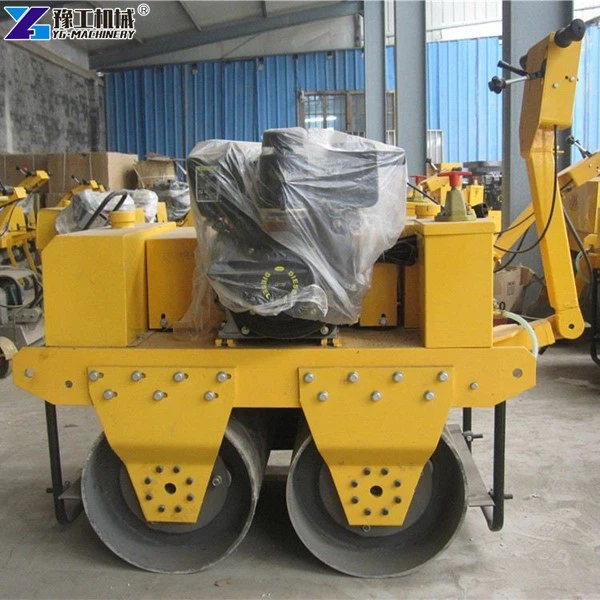
Pedestrian rollers are manually - operated machines, usually used for light - duty compaction tasks such as footpaths and small driveways. They are designed to be easy to control. The operating speed of a pedestrian roller is relatively low, typically in the range of 0 to 3 km/h. This slow speed is necessary to ensure that the operator can maintain control of the machine and achieve the desired compaction results. Pedestrian Roller -
Single Drum Road Roller
Single drum road rollers are used for a wide variety of soil compaction applications. For general soil compaction, the operating speed can range from 2 to 6 km/h. When working on cohesive soils, the speed is often closer to the lower end of this range. For granular soils, the speed can be adjusted towards the higher end. Some larger single - drum road rollers may have a maximum speed of up to 8 km/h for certain applications. -
Large - Scale Tandem Asphalt Rollers
Large - scale tandem asphalt rollers are used in major road construction projects. During the initial compaction of hot - mix asphalt, the speed is usually around 2 - 4 km/h. As the compaction progresses and the asphalt starts to cool, the speed can be increased. For the final finishing passes, these rollers can operate at speeds of up to 12 - 15 km/h, ensuring a smooth and even surface.
Importance of Optimal Operating Speed
Operating a road roller at the optimal speed is essential for several reasons. Firstly, it ensures the quality of compaction. If the speed is too high, the compaction force may not be sufficient to achieve the required density of the material. On the other hand, if the speed is too low, it can lead to over - compaction, which may cause damage to the material or the road surface.
Secondly, operating at the right speed improves the efficiency of the construction project. It reduces the time required for compaction, which in turn reduces labor costs and equipment wear and tear. Additionally, it allows for a more continuous workflow on the job site.
Conclusion
In conclusion, the operating speed of a road roller is influenced by multiple factors, including the type of compaction material, compaction depth, roller design, and job site conditions. Different types of road rollers have different typical operating speed ranges. As a road roller supplier, I understand the importance of matching the right roller with the appropriate operating speed for each project.

If you are involved in a road construction or compaction project and need guidance on selecting the right road roller and determining the optimal operating speed, I'm here to help. Our team of experts can provide you with detailed information and advice based on your specific requirements. Whether you need a Mini Tandem Roller, a Pedestrian Roller, or a Single Drum Road Roller, we have a wide range of high - quality products to meet your needs. Contact us to start a purchase negotiation and take your road construction project to the next level.
References
- Construction Equipment Handbook. Various editions.
- Technical manuals of leading road roller manufacturers.