

Shotcrete pumps are essential equipment in the construction industry, used for spraying concrete onto surfaces. They come in two main types: stationary and mobile. As a shotcrete pump supplier, I've had the opportunity to work with both types and understand their unique features and applications. In this blog, I'll explore the differences between stationary and mobile shotcrete pumps to help you make an informed decision for your construction projects.

Design and Structure
The most obvious difference between stationary and mobile shotcrete pumps lies in their design and structure. A stationary shotcrete pump is typically installed in a fixed location on a construction site. It is usually larger and more robust, designed to handle high - volume concrete spraying over an extended period. The pump is often mounted on a solid foundation, which provides stability during the operation. This type of pump is commonly used in large - scale construction projects such as tunnels, dams, and high - rise buildings.
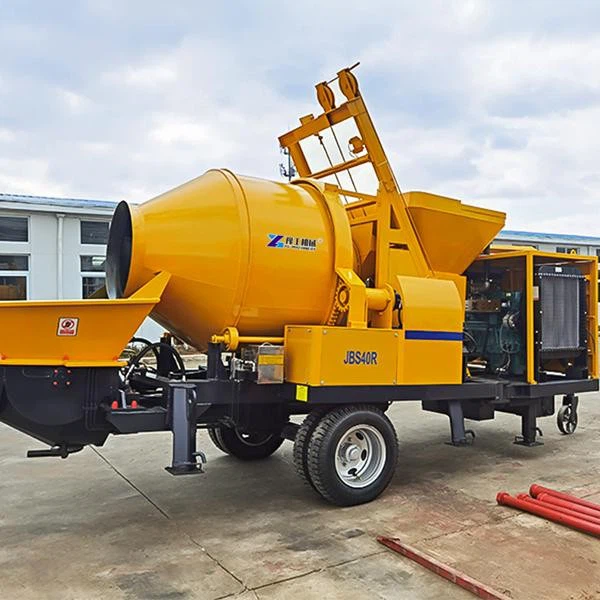
On the other hand, a mobile shotcrete pump is designed for easy transportation and mobility. It can be mounted on a truck, trailer, or skid, allowing it to be quickly moved from one location to another on the construction site or even between different sites. Mobile shotcrete pumps are more compact and lightweight compared to stationary ones, making them ideal for smaller projects, remote locations, or projects where the spraying location changes frequently. For example, in a renovation project of an old building, a mobile shotcrete pump can be easily maneuvered to different floors and areas.
Mobility and Flexibility
Mobility is a key factor that sets mobile shotcrete pumps apart from stationary ones. Mobile pumps offer unparalleled flexibility, as they can be moved to the exact location where the concrete spraying is needed. This reduces the need for extensive concrete transportation systems such as long hoses or conveyors, which can be costly and time - consuming to set up. For instance, in a mining operation, a mobile shotcrete pump can be driven directly into the mine shaft to spray concrete on the walls, providing immediate support to the excavation.
In contrast, stationary shotcrete pumps lack this mobility. Once installed, they remain in a fixed position, and the concrete must be transported to the spraying location using additional equipment. However, stationary pumps can be more efficient when the spraying area is large and relatively close to the pump installation. They can be connected to a large - capacity concrete batching plant, ensuring a continuous supply of concrete for long - term spraying operations.
Capacity and Output
When it comes to capacity and output, stationary shotcrete pumps generally have a higher capacity compared to mobile ones. Stationary pumps are designed to handle large volumes of concrete, with some models capable of spraying up to several cubic meters of concrete per hour. This high - capacity output makes them suitable for large - scale construction projects where a significant amount of concrete needs to be applied quickly.
Mobile shotcrete pumps, while having a lower capacity, are still sufficient for many smaller and medium - sized projects. Their output typically ranges from a few hundred liters to a couple of cubic meters per hour, depending on the model. The lower capacity is also an advantage in some cases, as it allows for more precise control of the concrete spraying process, especially in projects where a small amount of concrete needs to be applied at a time.
Power Source
The power source is another aspect where stationary and mobile shotcrete pumps differ. Stationary shotcrete pumps are often powered by electricity, which provides a reliable and continuous power supply. Electric - powered pumps are more energy - efficient and produce less noise and emissions compared to other power sources. They are also suitable for indoor construction projects or areas where environmental regulations are strict.
Mobile shotcrete pumps, on the other hand, can be powered by various sources, including diesel engines and electric motors. Diesel - powered mobile pumps are popular because they offer high mobility and can operate in remote areas where electricity is not readily available. They provide sufficient power to drive the pump and other components, even under challenging working conditions. Electric - powered mobile pumps are also available, which are suitable for projects where noise and emissions are a concern.
Cost
Cost is an important consideration when choosing between a stationary and a mobile shotcrete pump. Stationary shotcrete pumps generally have a higher upfront cost due to their larger size, more complex design, and higher - capacity components. Additionally, the installation of a stationary pump requires a solid foundation and may involve additional costs for electrical connections and concrete batching systems.
Mobile shotcrete pumps, while having a lower upfront cost, may incur higher operating costs in the long run. Diesel - powered mobile pumps require regular fuel refills, and the maintenance of the engine and other components can be more expensive compared to electric - powered pumps. However, the flexibility and mobility of mobile pumps can offset these costs in some projects, as they can reduce the need for additional equipment and labor.
Applications
The differences in design, mobility, capacity, power source, and cost also lead to different applications for stationary and mobile shotcrete pumps.
Stationary shotcrete pumps are commonly used in large - scale infrastructure projects such as tunnel construction. In tunnels, the stationary pump can be installed at a fixed location, and the concrete can be transported through long hoses to the spraying area. The high - capacity output of the stationary pump ensures that the concrete lining can be completed quickly to support the tunnel structure. They are also used in dam construction, where a large amount of concrete needs to be sprayed onto the dam surface to reinforce it.
Mobile shotcrete pumps are suitable for a wide range of applications, including building renovation, slope stabilization, and small - scale mining operations. In building renovation projects, the mobile pump can be easily moved to different floors and rooms to repair and strengthen the concrete structures. In slope stabilization, the pump can be transported to the site to spray concrete on the slopes, preventing soil erosion and landslides.
If you are interested in our shotcrete pumps, whether stationary or mobile, we offer a variety of products to meet your specific needs. You can explore our Small Concrete Pump for more options on smaller - capacity pumps. Our Portable Shotcrete Machine provides excellent mobility for your projects. And if you are looking for a combination of mixing and pumping, our Diesel Concrete Mixer With Pump is a great choice.
We are always ready to assist you in selecting the right shotcrete pump for your construction projects. Contact us for more information and to start a procurement discussion. We look forward to working with you to achieve your construction goals.
References
- Construction Equipment Handbook: Shotcrete Pumps, 3rd Edition
- Journal of Construction Technology: Comparison of Stationary and Mobile Concrete Spraying Equipment
- Industry Report on Shotcrete Pump Market Trends and Applications


