
Road Roller
Why Choose Us
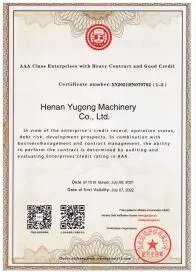
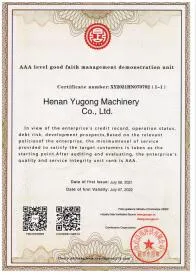
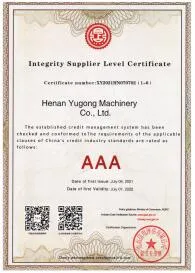
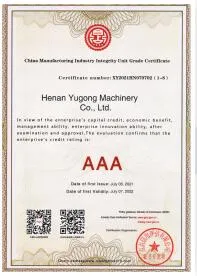
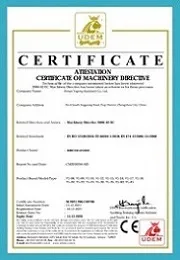
Our Certificate
ISO certification, CE certification, EPA Certification
Product Application
We have 8 product series and more than 100 products, covering industries such as bridges and tunnels, highways, light rail and high-speed rail, and mining.
Production Equipment
We have CNC cutting machines, welding machines, spraying lines, processing machine tools, etc. to ensure the efficient production of various types of construction machinery products.
Production Market
Our machines have been exported to many countries, including United States, Canada, Germany, France, United Kingdom, Greece, Netherlands, Italy, Brazil, Mexico, Argentina, Saudi Arabia, United Arab Emirates, etc.
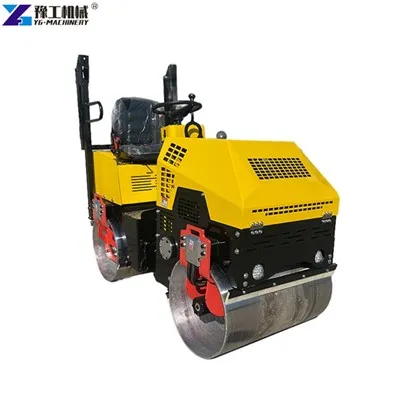
Road roller compactors are heavy machines that are built to level the ground and eliminate air pockets that can endanger a project. This type of equipment applies pressure to the surface forcing these aggregates to compress thus leaving a stable surface.



Consistent
There are numerous things to investigate and it's important to take into account consistency. If there isn't enough consistency on offer, there isn't enough value for that roller to function well.
The road roller can provide a finish that is certainly easy to the eye area and merely works out as intended. It makes it much simpler to acquire using a project without breaking a sweat.
Easy To Use
There are actually multiple requirements connected with a road roller and it's necessary for the operator to obtain throughout the project easily. With this thought, the street roller is great as it is able to handle everything the project demands. The road roller has the capacity to glance at the materials one by one and while ensuring that the final results are great.
This is basically the power of any high-quality solution and exactly how well it is able to adjust to the project's needs as they come. The operator will be able to breeze with the project quickly. More details can be found here.
Powerful
You will find a sense of power which comes in addition to a great road roller and it's important to invest in one without delay. The best road roller is able to deliver on all expectations and continues to maximize the work that's being carried out. There is nothing a lot better than going for a high-grade road roller and making sure the power is consistent through the entire process. That is why a lot more professional companies are beginning to include the use of a quality road roller within their setup. It simplifies the job and has the capacity to deliver on all power-related requirements.
Safe
The amount of pressure which is put on the road roller means it must be able to match those requirements to a tee. In cases like this, a higher-quality road roller can breeze through with the work that should be done and it will remain safe for your operator. Take time to look into exactly what the road roller is centered on and notice how good the system functions under stress.
6 Types of Rollers Commonly Used in Construction Projects
One type of walk-behind roller is a cylindrical roller. These ones are traditional in that they are relatively lightweight and are pushed by a person. All of the other types of rollers on this list have walk-behind and ride-on counterparts and are sometimes still powered by an engine.
Cylindrical rollers are used mainly for small and private projects, like yard work. Cylindrical rollers are typically 1 meter in diameter and are generally made of iron, stone or concrete.
Grid rollers are a type of roller that has a network of steel bars, which create a grid-like pattern on the steel drum. The grid may also be ballasted with concrete blocks or steel attachments for more contact pressure. These types of rollers are generally towed or pulled behind a tractor or another heavy machine.
The grid design on the cylinder drum produces a high contact pressure with little kneading action on compaction work. Because of this, they’re most suitable on well-graded, coarse soils, weathered rocks and for subgrade and sub-base road constructions.
Pneumatic rollers, sometimes called pneumatic tired rollers, are a type of large, ride-on roller with several rows of rubber tires on the front or rear end. The rubber tires provide an 80% coverage area and uniform pressure throughout the width of the tires.
They are typically used for pavements and can help smooth out and polish a project, but are also great for cold-laid bituminous or cold mixed pavements and layers of loose soil.
Sheepsfoot rollers, otherwise known as padfoot or tamping rollers, are rollers with many rectangular-shaped lugs, or “feet.” They’re great for compacting soil and silty clay in road construction work.
The sheepsfoot drum’s weight can be increased by ballasting it with water, damp sand, or mounting steel sections onto it, providing a more efficient compacting job.
Likewise, any projects with wet clay or other fine-grained soils at great depths should use this type of roller. You can finish off areas compacted by sheepsfoot rollers by going over them with a pneumatic roller.
There are generally two types of smooth wheeled rollers: single and double drum roller. they are also known as static rollers.
• Double drum or tandem
The tandem, or double drum roller, has one steel drum in the front and one in the back. As the two drums move, this moves the roller. The efficiency of the tandem roller comes from the two drums — entire sections of a highway can be flattened and paved quickly and efficiently.
These rollers are great for flat or gradual surfaces like asphalt, but because they have very little traction, they’re not recommended for anything specialized.
• Single drum or three-wheeled
Three-wheeled or single drum rollers are some of the most common pieces of heavy-duty machinery. When people think of road rollers, they typically picture a three-wheeled roller. They typically have a steel drum in the front and two special wheels in the back that can prevent most flat tires from happening.
Single drum rollers can work in tighter spaces and more specialized projects due to their smaller size. They’re great for creating foundations for buildings and paving highways or sidewalks, but because of the extra weight in the front, they won’t roll over some surfaces.
One thing to note is that single-drum can also refer to other rollers, such as the padfoot or smooth roller. Understanding that aspect can help differentiate exactly what you need.
Vibratory rollers are almost identical to smooth wheel rollers (including the single and double drum) except for one major difference: they come with a specialized vibrating component. As the roller compacts and flattens the surface, it will vibrate.
Since soil, asphalt, and concrete have natural empty spaces, they can cause a building to warp and sink, causing damage to the structure. Using a vibratory roller on your construction project can help keep the building’s structural integrity. Other types of soil that vibratory rollers are great at compacting are crushed rock or gravel.
Use It For Different Projects
While they may be called a ‘road’ roller, they don’t only have to be used on the road. While road construction is one common use, you can use them for other projects, which is why investing in one for the long term is an effective use of money.
You could also use a roller on construction sites, to smooth out a floor or for farming to compact soil, especially if the project is largescale.
There Are Different Ones To Choose From
You can choose the type of roller you need for the specific job, so you always know you’re using the best machinery available.
Vibratory rollers are becoming increasingly common, the vehicle vibrates as it moves along, which is powerful if you need to compact multiple layers as it means you only have to pass over a space once.
Then you’ve also got the cylinder roller, which is usually used to compact stone onto flat land.
Double drum rollers are great if you need to use the machine for different types of projects.


Hydraulic Transmissions Allow Greater Flexibility
In modern roller models, hydraulics are used to reduce the number of moving parts exposed to potential contamination. Why is this important? It allows the drum (the circular wheel) to be driven. This, in turn, provides extra traction when driving the roller uphill.
They’re Cost-efficient
While buying a whole new piece of equipment may seem like a huge financial commitment, you have to think long-term and work out the incredible benefits you’re going to get from it.
Plus, opting for a used road roller will save you a significant amount on a new one.
There Are Excellent Safety Features
Safety is one of the main considerations, whatever project you are working on.
Rollers have incredible safety features, including durable windshields and safe operational controls.
What Is the Importance of Road Roller?
Compacting The Soil And Roadbed
Through the special design of the roller and the high-frequency vibration function, the road roller is able to compact the loose particles on the surface of the soil or roadbed and eliminate the voids, thus improving the bearing capacity of the soil and Enhance the stability of the roadbed. This process is essential to ensure the safe use of roads.
Renovation And Rehabilitation Of Road Surfaces
As roads are used for a longer period of time, problems such as unevenness, potholes and cracks will occur. By compacting the loose road particles, the road roller provides the foundation for the laying of new road surface, making the road surface more smooth and solid, and improving the comfort and safety of driving.
Making contours and patterns
In some cases, roads require specific contours and patterns to provide good traction and skid resistance. Rollers can create different contours and patterns on roads as needed, which is important for traffic safety and road drainage.
How to Choose the Right Type of Road Roller
Choosing the right type of roller for your construction project is important, as the wrong one can result in poor workmanship, pockets of air that’ll sink the structure or uneven spaces that can be dangerous.
Figuring out the right type of roller depends on a few factors. The first of which would be the length of the project. Depending on the length, sometimes it’ll be more cost-efficient to rent a roller than outright buying one.
You’re also going to have to figure out the type of soil that’s going to be compacted. Fine-grain sand will need a different roller than clay. Plus, if you’re laying asphalt, you’re going to have to figure out if it’ll be better to have a static or a vibratory roller.
Figuring out whether you need a smooth vs padfoot roller for your project might seem difficult at a glance, but learning about the two rollers (and others) can definitely help you pick the right type of roller for your construction project.
Rollers are great at improving and repairing surfaces, making them some of the most trustworthy heavy equipment
Our factory
Yugong has 8 major factories and many cooperative manufacturers. Our advanced production factory located in a spacious modern industrial park. Our factory facilities and equipment are carefully designed to meet the needs of efficient production and quality products. Yugong is able to provide high-quality, reliable construction machinery products. We will continue to work hard to provide customers with excellent products and services, and work with them to achieve the success of engineering projects.


Certificate