
Shotcrete Pump
Why Choose Us
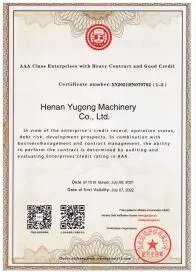
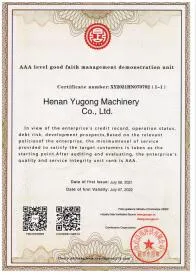
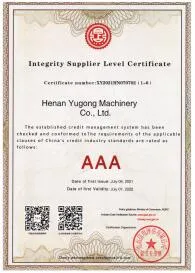
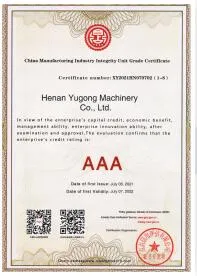
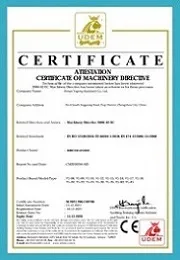
Our Certificate
ISO certification, CE certification, EPA Certification
Product Application
We have 8 product series and more than 100 products, covering industries such as bridges and tunnels, highways, light rail and high-speed rail, and mining.
Production Equipment
We have CNC cutting machines, welding machines, spraying lines, processing machine tools, etc. to ensure the efficient production of various types of construction machinery products.
Production Market
Our machines have been exported to many countries, including United States, Canada, Germany, France, United Kingdom, Greece, Netherlands, Italy, Brazil, Mexico, Argentina, Saudi Arabia, United Arab Emirates, etc.
Jet pump is a kind of fluid power pump. Fluid-powered pumps have no mechanical transmission and mechanical work components, it is by the energy of another working fluid as a power source to transport low-energy liquids, used to pump flammable and explosive materials is very safe. Jet vacuum pump is a device that utilizes the high-speed jet through the nozzle to pump out the gas in the container to obtain vacuum, also known as jet vacuum pump.


The working principle of shotcrete pump is mainly to use compressed air to form suspended airflow of concrete according to a certain proportion, and spray it to the surface to be laid to form a dense concrete layer to achieve the purpose of support. This kind of mechanical equipment usually consists of main machine and auxiliary machine, in which the main machine is mainly responsible for concrete conveying and spraying, while the auxiliary machine is responsible for concrete mixing and preparation.
In the operation of shotcrete pumps, concrete is delivered through specific pipes. First, the concrete is mixed to the proper consistency and then conveyed to the nozzle through the delivery pipe. During this process, compressed air plays a key role in helping the concrete to form a suspension so that it can be effectively sprayed onto the surface to be worked on. Shotcrete pumps are designed with dust control in mind, as the wet shotcrete method significantly reduces dust generation during the construction process, while increasing the strength of the concrete and minimizing rebound, resulting in improved construction efficiency and quality of work.
Shotcrete pumps may also be equipped with liquid quicklime pumping stations for adding quicklime during the concrete spraying process. The function of the quicklime is to accelerate the setting time of the concrete, which is particularly important where rapid hardening is required. The whole system achieves efficient, low-dust, high-quality concrete spraying operations through precise control and optimized design.
Precautions For The Use Of Shotcrete Pump
Fixing The Pump With The Base
It is forbidden to start the pump until it is fixed with the base. Make sure the conveying pipeline is firmly supported, and do not put heavy objects on the pipeline.
Safe Operation
When the pump is running, it is forbidden to carry out any overhaul, cleaning and lubrication work on the rotating part. Before conveying concrete, the conveying pipe must be lubricated by injecting mortar, concentrated lime water or lime paste into the conveying pipe.
Troubleshooting
When faults are found, immediately cut off the power supply and stop the pump for checking, and it is not allowed to work with faults. It is forbidden to manually clean the feeding hopper or remove the concrete in the hanging hopper when the machine is rotating.
Pipeline maintenance
When frozen in the pipe, prohibit the use of fire baking; delivery pipe clogging, should be disassembled to remove the clogged section, not allowed to use the pressure of the pump to open.
Locking and fixing
The plate hand on the locking should be closed tightly and stuck firmly with the card bolt. Operators are generally not allowed to get close to the pipeline, especially at the locking wrench. Before dismantling the locking connection, the pump must be stopped and the card bolt must be loosened.
Vertical conveying
When conveying in the vertical direction, the upright pipe should be firm and reliable.
Handling after work
The power supply must be cut off before cleaning the pump, hopper and conveying pipe.
The main role of shotcrete pump is to use pressure to convey concrete continuously along the pipeline.
Shotcrete pump is a kind of mechanical equipment, which can continuously convey concrete along the pipeline by applying pressure, and this technology is widely used in construction, roads, bridges and other civil engineering. The use of shotcrete pump greatly improves the construction efficiency, reduces labor costs, and also improves the quality of the project. The working principle of this kind of pump is mainly through the application of pressure, so that the concrete can flow in the pipeline, thus realizing the rapid delivery of concrete.
The application of shotcrete pumps in construction also includes the use of wet sprayers and dry sprayers. Wet sprayers are usually coupled with a mixing device and pump the concrete to the construction site, while dry sprayers spray fine stone concrete through a pressure gun. Each of these methods has its own characteristics, with wet sprayers being used where higher strength and better uniformity of concrete is required, and dry sprayers being used where speed of application is more important.

Types of Shotcrete Pumps
Tank, rotor and auger shotcrete pumps are similar to dry sprayers, and these types of pumps are somewhat similar in construction to dry sprayers.
Pumped shotcrete pumps utilize a pump to squeeze the mix and add compressed air at the nozzle to increase the spray rate. Specifically, pumped shotcrete pumps include extruded hose pumps, piston pumps and screw pumps.
The main working mechanism of centrifugal wet spraying machine is a rotating impeller, which relies on centrifugal force to throw concrete to the sprayed surface.
Mixed wet spraying machine is actually a unit, from the dry spraying machine spraying sand and gravel, mud pump pumps pumping cement slurry, and then combined together sprayed to the sprayed surface.
Application Areas of Shotcrete Pump
Foundation treatment
In civil engineering, shotcrete pumps can be used to reinforce foundations by injecting concrete into underground cavities or loose soil to fill the voids and form a solid foundation, thus improving the bearing capacity and stability of foundations. bearing capacity and stability of the foundation.
Building Repair
For pre-existing concrete structures that are cracked or damaged during use, shotcrete pumps can be used to repair these problems. By injecting concrete slurry into the damaged area, it fills the cracks and reinforces the structure, restoring the original strength and stability of the building.
Tunneling
Shotcrete pumps are commonly used for shotcrete lining in tunneling projects. By spraying concrete onto the tunnel walls, a strong lining structure is formed, enhancing the stability and safety of the tunnel.
Water conservancy projects
In water conservancy projects, shotcrete pumps are also widely used to repair concrete structures such as dams, embankments and canals, to improve their compressive strength and durability, and to ensure the safe operation of water conservancy facilities. operation.
Operation Method of Shotcrete Pump
Pre-preparation
• Confirm the shotcrete project drawings and understand the design requirements and construction parameters of shotcrete.
• Check the spraying equipment to ensure that it is in good condition and carry out maintenance.
• Prepare concrete raw materials, including cement, sand, gravel, etc., and mix them in proportion.
Spraying Concrete Operation
• Clean the working surface to ensure the spraying surface is clean and free of debris.
• Set up a safe area at the construction site and use warning signs.
• Carry out trial operation of spraying equipment, check spraying pressure and spraying speed to ensure that the equipment works properly.
• Before spraying concrete, wet the construction surface to improve the adhesion of concrete.
• Set the parameters of sprayed concrete construction process, including spraying pressure, spraying speed, spraying distance, etc.
• Install the conveying pipe and nozzle, and carry out the shotcrete operation.
Post-processing Of Shotcrete
• After the completion of shotcrete, clean up the spraying equipment and conveying pipe in time to prevent equipment damage caused by concrete solidification.
• Spray water on the surface of the shotcrete maintenance, moisturizing and maintenance cycle according to the design requirements.
• Regularly check the spraying surface, and deal with the problems in time.
Safety Precautions
• The operator should master the operation technique of the spraying equipment and wear the safety protection equipment.
• Operators should pay attention to the safety area around the equipment and prohibit unrelated personnel from approaching.
• When using the spraying equipment, follow the operating procedures strictly to avoid safety accidents.
Maintenance of Spraying Concrete Pump
• Regularly check the working condition of the hydraulic system, including the quality check of the hydraulic oil, the smoothness check of the oil circuit, and the damage or wear and tear check of the hydraulic pump, hydraulic cylinder, hydraulic valve and other components. If necessary, hydraulic oil needs to be replaced or added to ensure the normal operation of the hydraulic system.
• Maintenance of the electrical system involves tightness checks of the electrical system wiring, electrical components (such as motors, capacitors, solenoid valves) Electrical system maintenance involves checking the tightness of the electrical system wiring, electrical components (such as motors, capacitors, solenoid valves). Electrical components that are found to be defective need to be replaced promptly.
• Maintenance of the mechanical system involves checking the oil level of the gearbox, checking the wear and tear of the gears, and monitoring the working condition of the bearings. If necessary, lubricants need to be changed or worn parts repaired.
• Regular maintenance of the hydraulic oil, including regular replacement and checking the quality of the hydraulic oil to maintain the working efficiency and prolong the service life of the equipment.
• Cleaning of debris and clogs inside the equipment to keep the sprayed concrete equipment unobstructed and to avoid affecting the normal operation of the equipment.
• Lubrication and cooling of the equipment, pay attention to the lubrication and cooling of the equipment to extend the service life of the equipment.
Our factory
Yugong has 8 major factories and many cooperative manufacturers. Our advanced production factory located in a spacious modern industrial park. Our factory facilities and equipment are carefully designed to meet the needs of efficient production and quality products. Yugong is able to provide high-quality, reliable construction machinery products. We will continue to work hard to provide customers with excellent products and services, and work with them to achieve the success of engineering projects.


Certificate